
Production line design that delivers real output
Many factories buy a faster filling machine to get more output, but the end of the line stays the same. Usually nothing is broken: the line is simply not balanced. We design the whole line around one target output.
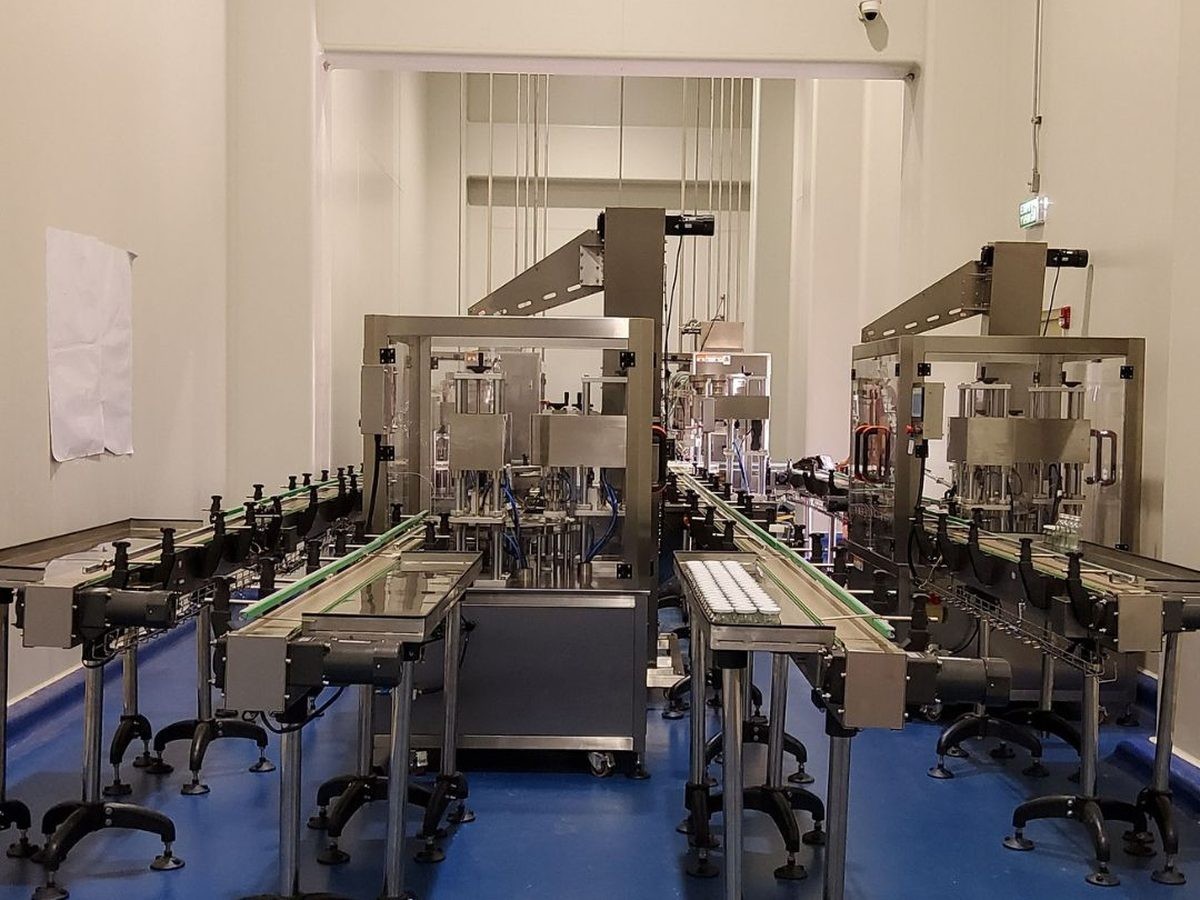
The basics
A line is only as fast as its slowest station
A production line is a set of machines and people working as stations in sequence. In food, beverage, pharma and cosmetic plants the last part is the packaging line: bottle feeding, filling, capping or sealing, labeling and coding, inspection, then end-of-line packing.
Example of a bottleneck
Filler 40 bottles/min · capper 25 bottles/min · labeler 35 bottles/min. This line cannot exceed 25 bottles/min. Buy a new 60 bottles/min filler and the line still makes 25. The money does not pay back.
Real time is also lost to size changes, cleaning, fallen bottles, jammed caps and operators who cannot refill materials in time. Good line design counts these too.
Single machine vs. complete line
- Speed: a machine has its own spec; a line runs at its slowest station
- People: operators around one machine, or spread by station and reduced by conveyors
- Size change: adjust one machine, or every station together
- Agree before buying: machine spec, or the line target, layout and acceptance criteria
Our method
6 steps to design a filling and packing line
Set the target from sales
Units needed per day, divided by real running hours (minus breaks, changeovers and cleaning), gives units per minute. Then allow for growth.
Collect real product data
Viscosity, foam, filling temperature, bottle size and material, cap type and label size decide the filling head and the real speed.
Balance every station
Set every station slightly faster than the target, later stations faster than earlier ones, with buffers before stations that stop often.
Lay out on the real floor
Line length and walkways, material in and product out, power, air and water, and where each operator stands.
Agree acceptance criteria first
Write what will be measured before ordering: speed counted as good units at the end of the line, fill tolerance, no leaking caps. Then test at the factory (FAT) and on your site (SAT) with the same criteria.
Install, train, maintain
Output stays steady when your operators can adjust the machines themselves, with a preventive maintenance plan and fast-wearing spare parts in stock.
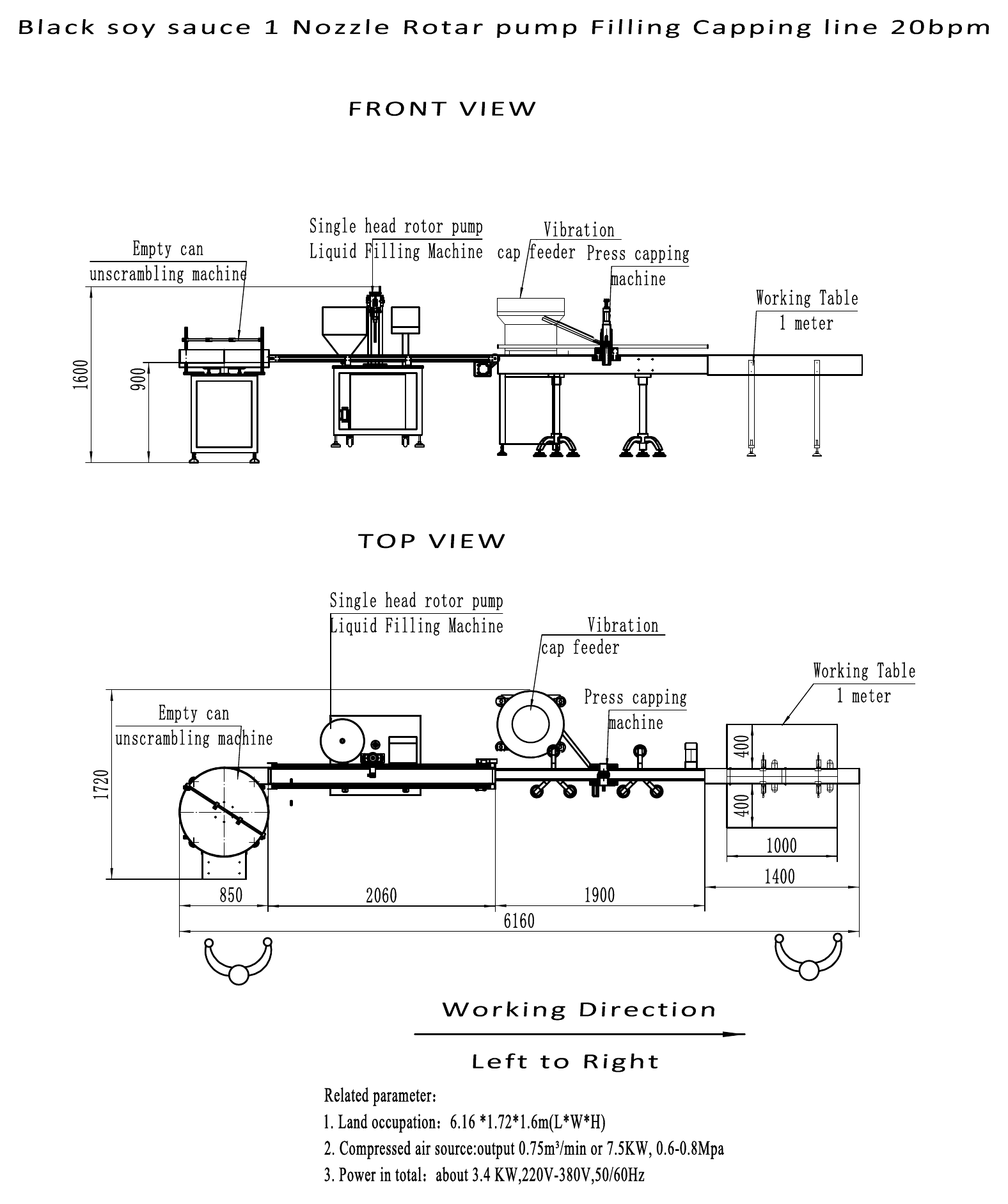
Layout drawing of a soy sauce filling line, front and top view
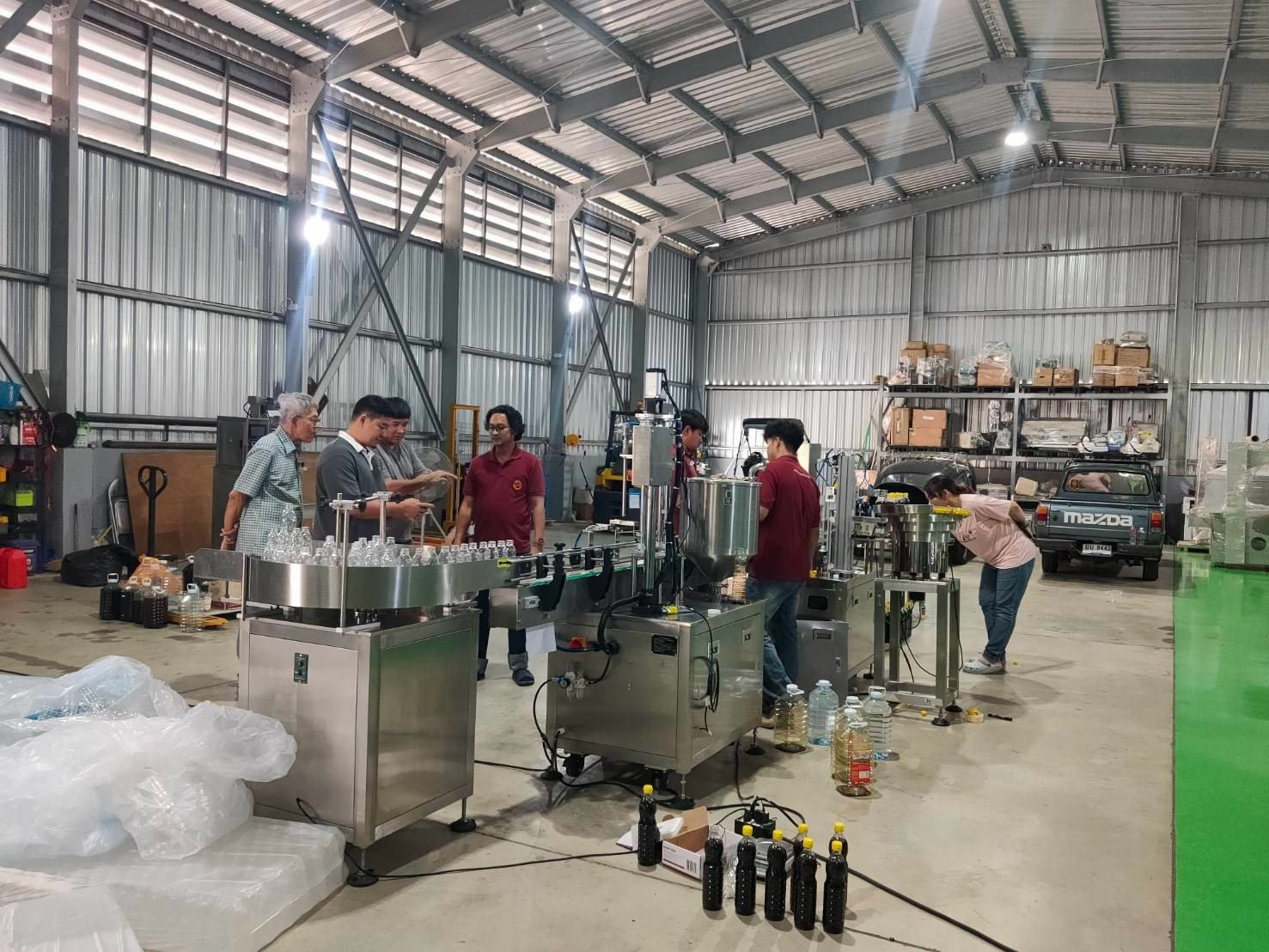
Factory acceptance test (FAT) of a filling line before delivery
Project evidence
Lines from real projects
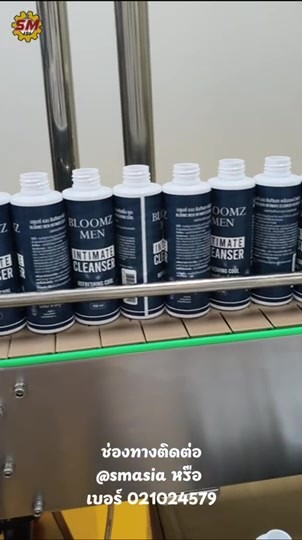
From a manual filler at 15 bottles/min to a filling, capping, labeling and date-coding line at 30 bottles/min, with the same 2 operators.
Designed for 20 bottles/min and passed the FAT before delivery.
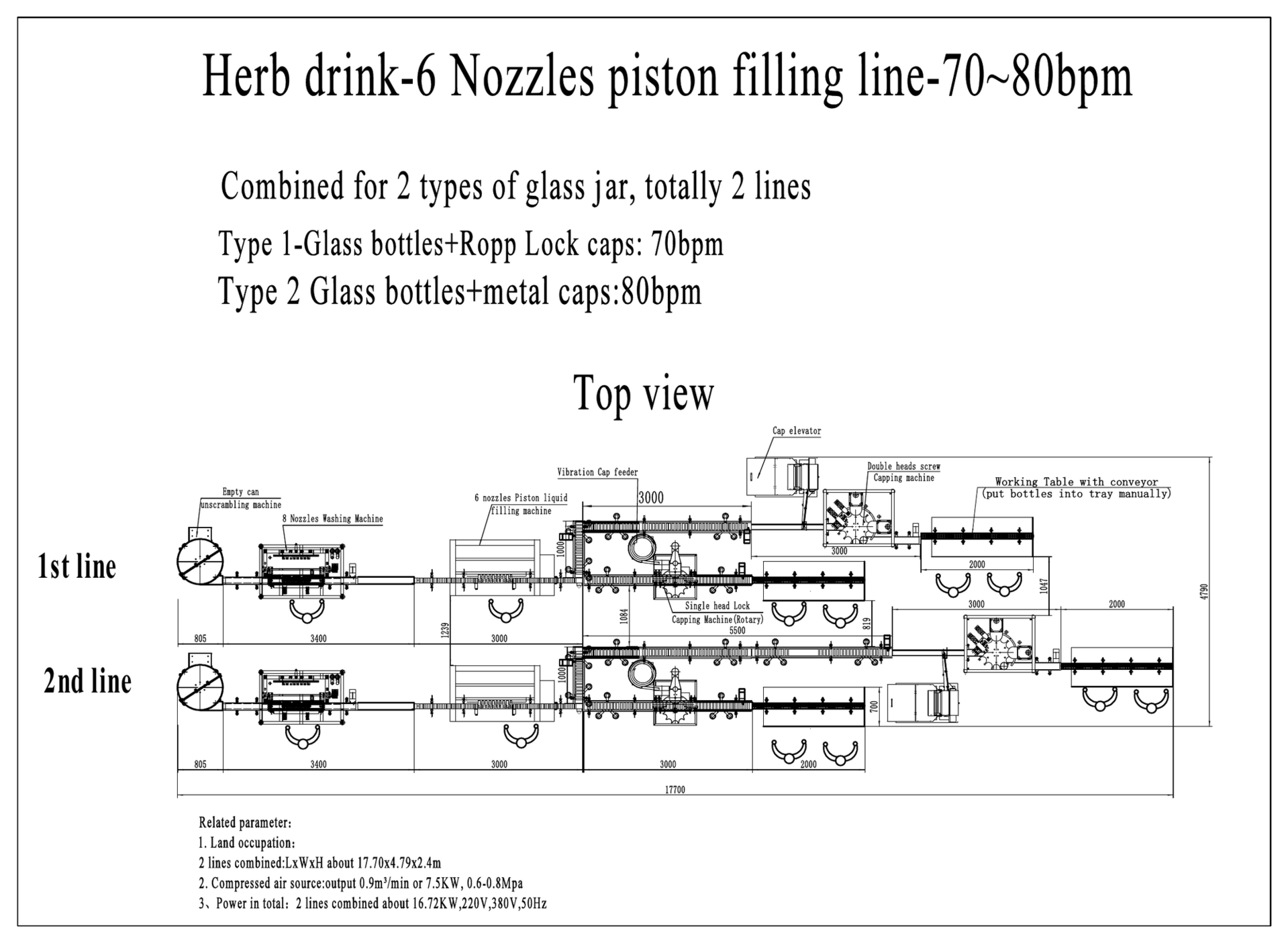
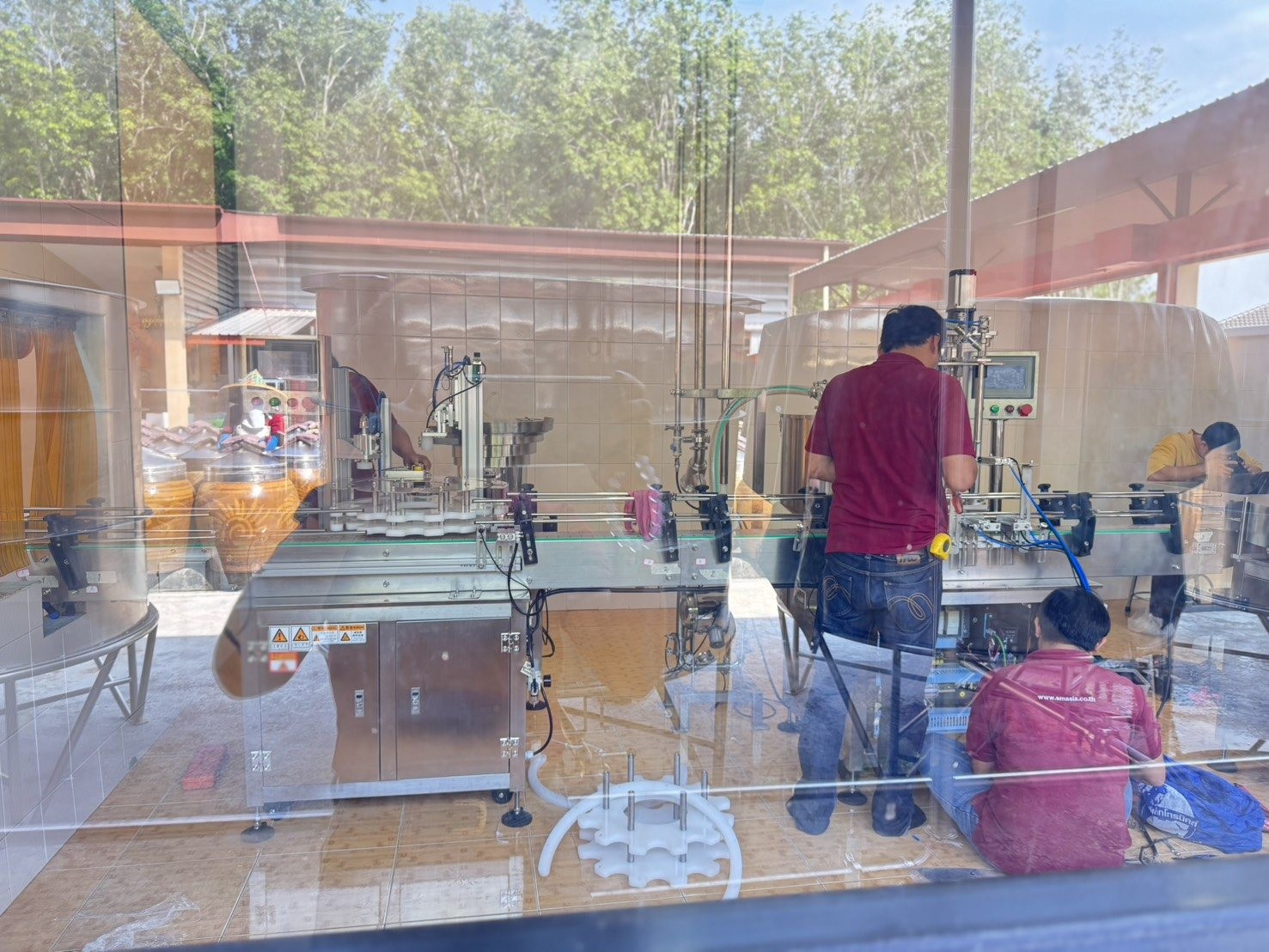
Glass jars and bottles: unscrambling, washing, 6-head piston filling and capping, installed in a cleanroom.
Station layout and machine spacing for a complete line. Design proposed to a customer, not yet installed.
Figures belong to each project and depend on the product, packaging and site.
Before we talk
Checklist to prepare
- Sales or production volume needed per day, and working hours per shift
- Samples of your product, bottle, cap and label
- Number of sizes and recipes to run on the same line
- Floor area, and where power, compressed air and water are
- Number of operators today and current problems: which station waits, which station piles up
- Budget and the date you want the line running
Talk to our engineers
Tell us about your product and the output you need
You do not need full engineering data. Send your product, packaging and target output, or just a photo. Our engineers will reply with questions and a recommended setup.
Warranty, delivery and service terms for your country: please ask our sales team.